Skip to content
Pichisurf
ES

Hey, I'm Vlad 👋

I'm an entrepreneur and an adventurer, based here in Pichilemu. I'm also a fairly mediocre surfer (the kind who checks five forecasts and still paddles out at the wrong beach).

Reading a surf forecast is harder than it looks. There are lots of forecasts and lots of sources, and they rarely agree. And the same forecast means something very different at each beach: what works at one can be a mess at Infiernillo or flat at La Puntilla.

So I built Pichisurf for myself: one read per beach, from every source I could find. Hopefully it's useful for the rest of the community too.

Vlad
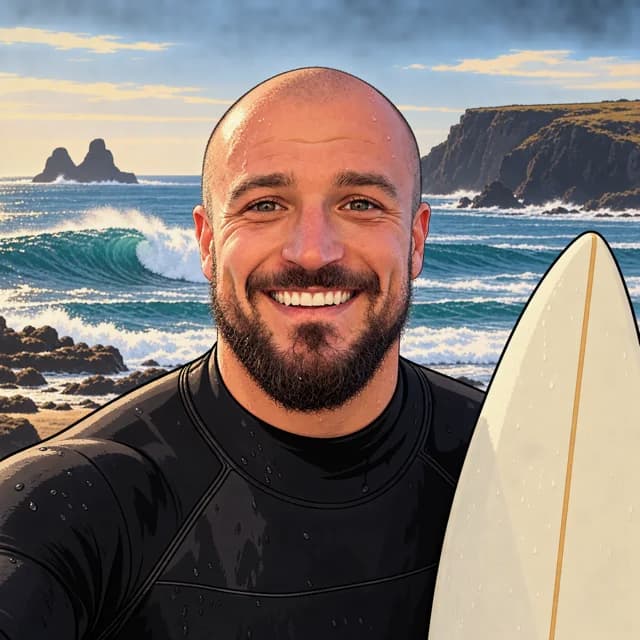
Illustration of Vlad with his board

How Pichisurf works

  1. Collect

    Every few hours it pulls about a dozen sources: 4 wave models, 8 global wind models, per-beach forecasts, the Chilean Navy's San Antonio wave buoy, the Pichilemu harbour station, SHOA tide tables and the Navy's swell warnings.

  2. Agree

    Code combines them into a consensus, weighting each source by how accurate it has been here: we scored them against 23,189 hours of buoy data. The best wave model is off by 0.16 m on average.

  3. Understand

    AI reads that consensus for each beach using a model of its shape: the headland, the seafloor, the swell window, the wind shelter and the tide. We built it from studies, satellite images from 2010-2025 and 1,485 sourced statements.

  4. Learn

    Your reports from the water correct it. Each one adjusts how a beach is read, a little at a time and within limits.

Sources